

How Is Sucuk Dried?
Date: 08.03.2022 17:12
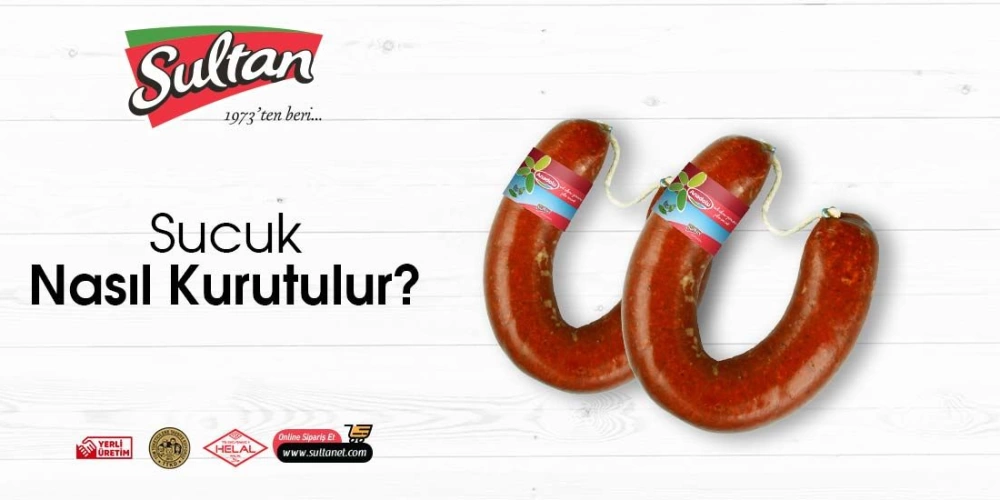
Produced under suitable conditions and in appropriate environments, Sultan sucuk is a healthy and nutritious food. Sucuk, which has probiotic properties, offers numerous health benefits. However, there are certain stages that require attention during its production. In addition to obtaining a delicious mixture, care must also be taken when drying and storing sucuk. Since it is a meat-based food, potential problems that may arise in the long term must be prevented from the outset.
For sucuk to ferment, it must be stuffed into casings and left to dry under suitable conditions. This way, its nutritional values will be preserved. A series of procedures is required to maintain sucuk’s probiotic balance and ensure its health benefits.
So, how is sucuk—which we enjoy consuming at every meal, consider indispensable at our tables, and find especially delicious with eggs and sandwiches—dried? What are the sucuk-drying stages used by producers? How can homemade sucuk be dried properly? We have researched the answers to all these questions and included them in our article. If you are wondering how sucuk is dried or are curious about the drying process after making sucuk at home, read our article carefully.
The Drying Stage in Sucuk Production
This beneficial food, which can be made using beef, buffalo, mutton, goat meat, and poultry, is produced by kneading meat blended with a special spice mixture and fermenting it under suitable conditions.
The spice mixture that gives sucuk its flavor consists of black pepper, cumin, red pepper, and garlic as a seasoning; however, this mixture may vary depending on the producer.
When preparing the sucuk mixture, nitrite—one of the substances required for fermentation—is added to the mixture along with meat, fat, and spices. Salt and sugar are also added, ultimately creating this unique flavor.The mixture prepared according to the producer’s recipe is mixed in special machines in a way that prevents air from entering. It is then stuffed into natural or artificial casings. After stuffing, it is shaped according to its type and tied. The type of casing is just as important as every other stage. For example, when artificial casings are used, they must be capable of allowing oxygen and water vapor to pass through and must have a structure that can shrink. This is an important point that also affects the sucuk-drying process.
The sucuk stuffed into and tied within the casings is hung so that the pieces do not touch one another. The filled casings, kept separate from each other, are left to rest in this manner. This stage also marks the beginning of the drying process. The water in the casings, which are hung at 10–15 degrees for approximately 6–12 hours to rest, drains away. As the water drains, the mixture fills the casing completely.
Suitable conditions must be provided in the environment for the sucuk-drying process to be completed properly. These conditions are:
- Relative humidity balance,
- Airflow,
- Temperature.
During the sucuk-drying process, the relative humidity in the environment is expected to be 95% at the beginning and to fall to between 75% and 80% toward the end of the ripening period. At the beginning, the airflow should be 1 m/s and should gradually be reduced throughout ripening. The ambient temperature is also very important. It should be between 18 and 22 degrees.
Once the necessary environmental conditions and temperature have been established, the sucuk is rested and then transferred to maturation rooms. After it is placed in an environment with the conditions listed above, drying is achieved. This drying process may vary depending on the producer. Some producers may also use different methods. For example, fermentation may occur naturally, or it may be carried out by adding pure cultures to the prepared mixture.
During the drying stage, the meat must be checked continuously, and the environmental conditions must be kept stable. This stage should continue until the moisture content of the final product falls to approximately 40%; the drying process should not be ended before then.
Drying Stage for Homemade Sucuk
It is possible to obtain a good sucuk mixture if due attention is paid to the choice of meat and the recipe. However, care must also be taken when stuffing the sucuk into the casing. Although producers can perform this process easily in large production facilities, it may be somewhat challenging at home. Nevertheless, with time, it is possible to learn how to stuff the sucuk and understand the process.
Stuffing the sucuk mixture into the casing is necessary both to provide suitable conditions and to achieve a delicious product. Of course, alternative stuffing methods are available for those who do not want to use casings or cannot obtain them. However, the casing used during stuffing creates a semipermeable system. Through this semipermeable system, water is released slowly and in a controlled manner. The spices added to the mixture gradually dry and cook the meat. This prevents the meat from spoiling and producing bacteria while it rests.
Because of the semipermeable system, the mixture stuffed into the casings is prevented from absorbing the flavor or moisture of the surface it touches. Therefore, the sucuk must be hung to dry and prevented from touching one another. For this reason, the sucuk should be threaded onto cords, hung up, and its ends tied tightly.
Research into how sucuk is dried also points to the choice of meat. Even the fat content of the selected ground meat affects the drying process. The ground meat used should contain approximately 40% fat, which prevents the sucuk from becoming overly hard as it loses moisture. The sucuk hung up and left to dry thus matures and develops flavor without becoming hard. This ensures proper drying.
Things to Consider When Drying Sucuk
Many people wonder how sucuk is dried. Those who have never made sucuk at home before may think they cannot carry out the drying process properly and generally avoid trying it. However, drying homemade sucuk is not as difficult as it may seem. You only need to pay attention to certain points and complete the stages correctly.
During the stuffing stage, no air should remain inside the casing. Air entering the casing or contact with outside air will cause the sucuk to spoil. Therefore, air bubbles that form while stuffing should be pierced with a needle to release the air. This is a stage that directly affects the drying process.
After stuffing the sucuk properly, drying it at home can be a source of concern for many people. The inability to find suitable places to hang the sucuk and to create the appropriate temperature conditions in today’s homes are among the reasons for this concern. Finding a dark place indoors that does not receive sunlight and where the airflow remains stable can be quite difficult. In such cases, it is recommended that the sucuk be hung in the refrigerator. Alternatively, the drying process can be carried out by placing it in the freezer. Sucuk that will not be consumed immediately can be stored in a deep freezer.
The drying process is completed after the sucuk is kept in the refrigerator for approximately three weeks. At the end of this three-week period, your sucuk will be ready. Another important point to consider is cleaning the surface with vinegar water every three to four days to prevent mold from forming.
Another detail that should not be forgotten is that sucuk should not be left to rest for longer than three weeks. This will cause it to become hard and alter its flavor. Sucuk that will not be consumed immediately can be stored in a deep freezer.
If your home is suitable and you have a pantry, you can hang the sucuk pieces so that they do not touch one another. This will allow them to dry properly. Immediately afterward, you should place them in the refrigerator to prevent spoilage.
It is also recommended to leave the sucuk to dry on a sheet of newspaper instead of hanging it. The newspaper absorbs the sucuk’s excess moisture and water, helping it dry. After this process, the sucuk must обязательно be placed in the refrigerator.
Related Products